




Smart Home Tools That Support Aging in Place
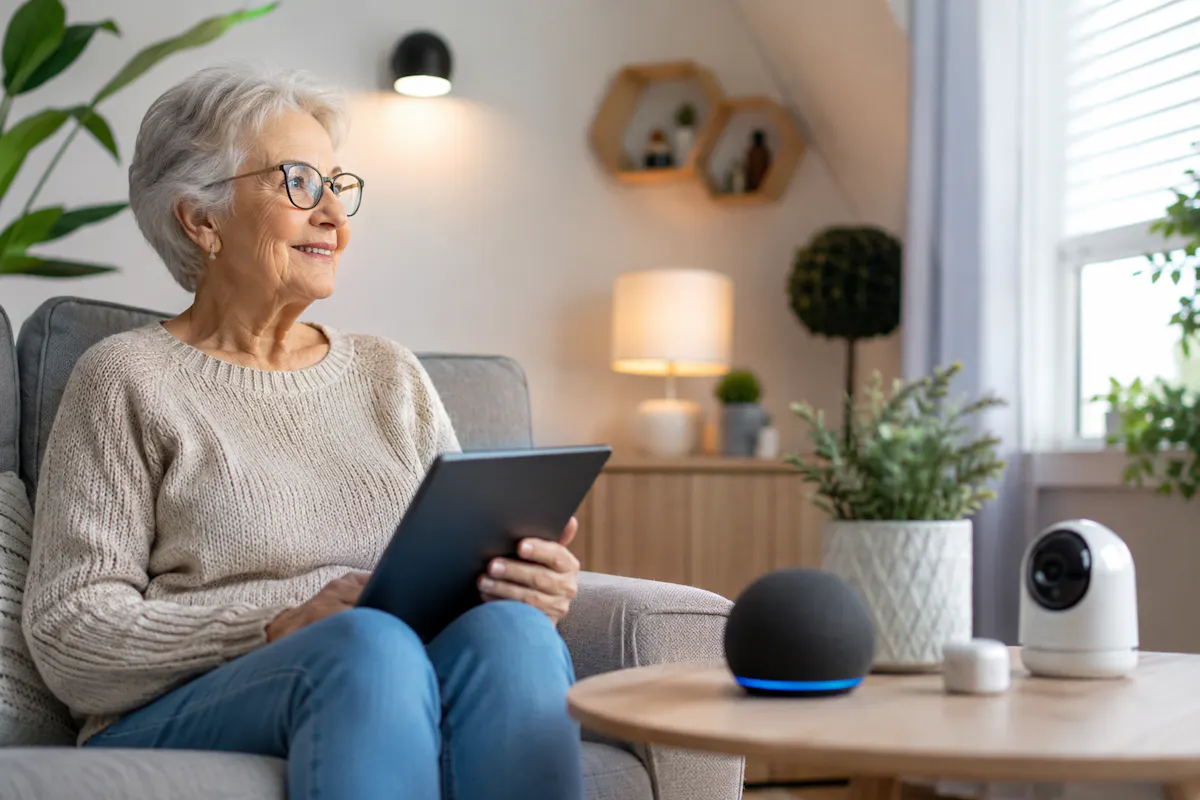
As more people choose to remain in their homes as they grow older, technology is playing an increasingly important role in making that choice more manageable. Aging in place is a term used to describe a senior’s ability to live independently in their own home for as long as possible. Smart home tools can help support an older adult’s desire to age at home by improving safety, comfort, and peace of mind for both them and their families.
Let’s take a look at some of the ways technology might be helpful to older adults trying to stay safe and independent in their own homes.
Technology to Support Aging in Place
One of the most helpful smart home tools for seniors is voice-controlled technology. Voice assistants, such as Amazon Alexa, Apple Siri, and Google Assistant, allow users to control devices using simple spoken commands rather than physical buttons or screens. With a voice command, seniors can turn lights on or off, check the weather, set reminders, or call family members. This is especially useful for individuals with limited mobility or vision challenges, since it reduces the need to move around the house or handle small devices.
A few more categories of technology that might be useful are:
- Smart lighting systems: Lights that can be scheduled or are motion activated can be a valuable addition to a senior-friendly home. When someone enters a room or walks down a hallway at night, for example, the lights will automatically turn on. This feature helps prevent falls, which are one of the most common safety concerns for older adults. Smart lighting can also be controlled remotely or by voice, making it easier to manage lighting without reaching for switches.
- Smart exterior devices: Smart doorbell and security cameras are convenient and provide a critical layer of safety. These devices allow seniors to use a smartphone, tablet, or indoor display to see who is at the door before opening it. Some also include two-way communication, allowing users to speak with visitors without physically going to the door. This can help reduce the risk of scams or unwanted visitors and provide an added sense of security.
- Medication management tools: This type of tool has become quite common in smart homes for older adults. The automated pill dispensers can be programmed to release the correct medication dosage at the right time of day. Many can provide audible reminders or alerts when it is time to take medication. Some systems even send notifications to caregivers or family members if a dose is missed. This technology can help seniors maintain their medication schedules and reduce the risk of mistakes.
- Smart thermostats: These devices automatically adjust temperature settings based on schedules or room activity. Seniors can control the thermostat using voice commands or easy-to-use smartphone apps, eliminating the need to walk to a wall-mounted control panel. Maintaining a consistent indoor temperature can improve comfort and prevent health issues related to extreme heat or cold.
- Health monitoring technology: Another growing area of smart home tech products is focused on tracking a senior’s health. Some are comprehensive health tracking systems that monitor the older adult and their entire home. Then there are wearable devices, such as the Apple Watch or the Oura Ring, that track heart rate, activity levels, and sleep patterns. Others are designed to monitor specific concerns, such as fall-detection apps that can automatically alert emergency contacts if a fall occurs.
- Mobile monitoring devices: For seniors who travel or live alone, being able to call for help in the event of an emergency is important. A mobile monitoring unit like the Life Protect 24/7 system allows the wearer to just press a button to be to connected to someone who can help. That brings peace of mind for both the senior and their loved ones.
Make Aging at Home Safer With Technology
The bottom line is that technology can play a vital role in making daily life easier, safer, and more comfortable for seniors who wish to remain in their homes. By combining convenience, safety features, and remote support, these technologies help older adults maintain independence while staying connected and protected in their own living spaces.